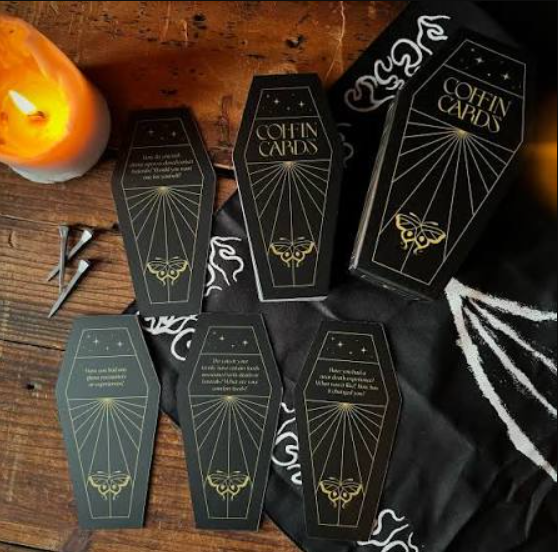
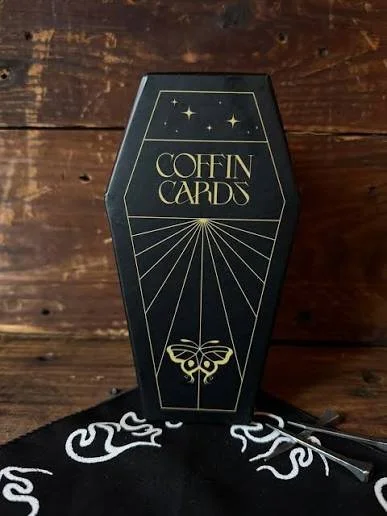
Product review: Coffin cards
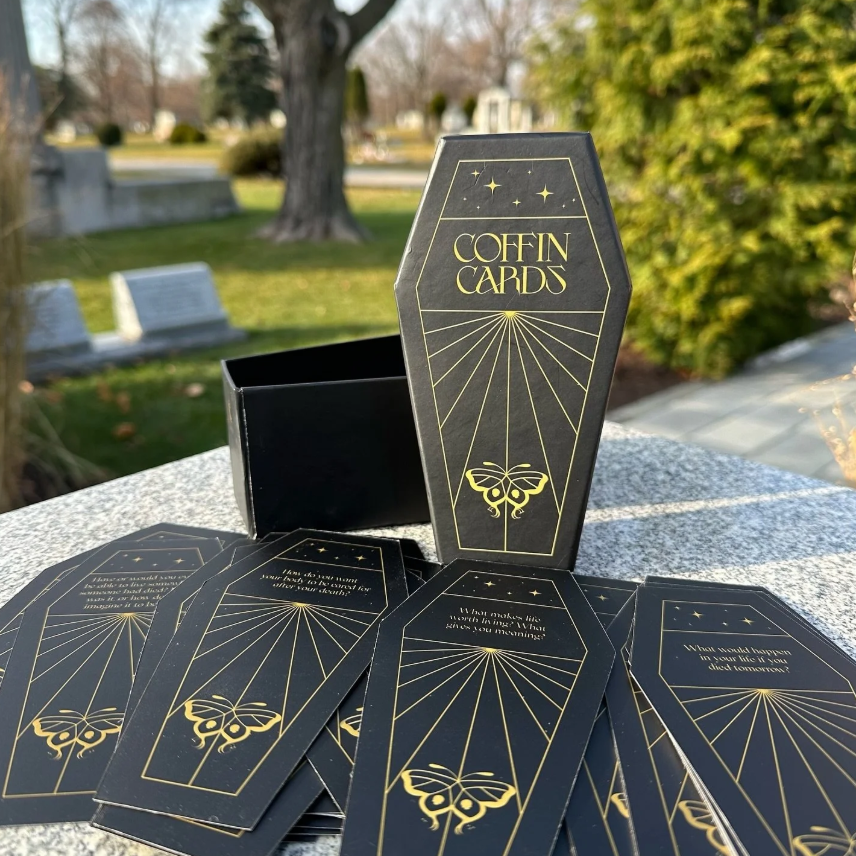
I’m always drawn to tools that help people face the big, awkward questions we tend to avoid—especially those about death, dying, and the grief that follows. Coffin Cards, a deck of 115 thought‑provoking questions created by Alejandro Salinas, is built precisely for that purpose: to invite reflection, spark honest conversations, and ease the unease around mortality by making it familiar and discussable. The deck is designed for journaling, solo reflection, or group conversation—Death Cafés, gatherings, therapy sessions, or casual chats—and the prompts range from practical end‑of‑life considerations to philosophical and emotional questions that encourage curiosity, creativity, and caregiving imagination.
Using the cards is simple and flexible: pull one daily as a journaling prompt, use several as icebreakers at an event, to start (or continue) a family conversation, or place a few on a table at an event to invite strangers into meaningful exchange. With 115 prompts you can return to the deck repeatedly; many of the questions feel fresh compared with other death/grief decks I’ve experienced, offering novel angles on legacy, ritual, and emotional work. The tone is open‑ended enough to accommodate different beliefs and relationships with death while remaining specific enough to spark concrete planning or emotional processing.
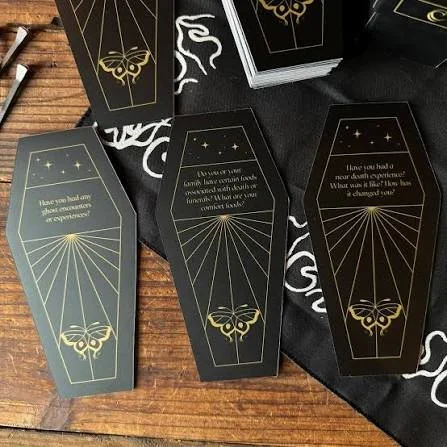
Example prompts include:
How can we make our society more supportive around death and grief?
If you had the chance, would you live forever? Why or why not?
What would happen in your life if you died tomorrow?
If you were cremated, what would you like done with your ashes?
What objects or offerings would you like placed on your grave or altar?
What role has art and creativity played in your grieving process?
The creator’s, Alejandro Salinas, background—Vice President of the Chicago Death Doula Collective, End of Life Specialist certification, Conscious Dying training, Death Café host, and teacher of dream and yoga practices—shows up in the deck’s grounded yet inquisitive voice. The cards arrived beautifully and thoughtfully packaged, even with a little note, and the minimal, solemn design makes them a respectful and grounded addition to a coffee table or a therapy session. The deck helps break the taboo around death by making conversations about mortality feel normal and approachable, and its versatility means it works well both for private reflection and for structured group use.
There are limits: the deck is explicitly focused on death, dying, and grief, so if you’re seeking a broader life‑design tool that avoids mortality language it may feel pointed. Some folks might feel threatened by the tone or approach, which is a symptom of our society’s death anxiety not a true drawback of the product. The price—$40—isn’t cheap, but the cards don’t feel cheap either; the quality and thoughtfulness make the value feel worthwhile, especially if you plan to use them frequently or in community settings.
Coffin Cards does what it promises: it opens the door to conversations and reflections most of us sidestep. If you want a tool to normalize death‑talk, provoke honest planning, and cultivate emotional familiarity with mortality, this deck is a meaningful investment.